Deciding between a condo and a townhouse in Norwalk can feel tricky. On paper they sound similar, yet what you own, what you maintain, and how you finance can be very different. If you want a low‑maintenance lifestyle near the water or train, or a home that feels more like a house with fewer chores, understanding the differences will help you buy with confidence.
In this guide, you’ll learn how condos and townhouses are defined, what fees typically cover, how insurance and flood risk work in Norwalk, financing basics, where each option is commonly found locally, and a practical checklist to use before you make an offer. Let’s dive in.
Condo vs townhouse basics
“Condo” describes a legal form of ownership. You own the inside of your unit and a fractional interest in the common elements like the land, roof, hallways, and amenities. A condo association governs the community using a declaration, bylaws, and rules, and it collects monthly assessments. For a helpful overview of how common‑interest communities operate, review the National Association of Realtors’ resources on community governance at NAR’s website.
“Townhouse” describes the building style. It is usually a multi‑level home that shares one or two walls with neighbors and has a private entrance. A townhouse can be fee‑simple, where you own the structure and the land it sits on, or it can be organized under a condo regime, where exterior and land are owned in common. The key takeaway: the word “townhouse” alone does not tell you who maintains the roof, siding, or grounds. Always confirm the legal form and the governing documents.
Ownership and maintenance
In most condos, you handle the interior of your unit and the association handles the exterior, the building envelope, common areas, and grounds. Look for phrases like “bare walls‑in” or “walls‑out” in the declaration. These terms explain how far the master insurance policy extends and what falls to you.
Townhouses vary. In a fee‑simple townhouse, you typically maintain the exterior, roof, and any yard or driveway, unless the HOA takes on specific tasks. In a condo‑regime townhouse, responsibilities often mirror traditional condos. The governing documents and HOA summary sheet will spell this out.
HOA fees and reserves
Your monthly fee usually covers exterior maintenance, landscaping, snow removal, trash, common utilities, master property insurance, management, and reserve contributions. Communities with elevators, pools, gyms, or large grounds typically have higher dues. Older associations may need stronger reserves for capital items.
Healthy reserves reduce the risk of special assessments. Ask for the current budget, recent financials, and any reserve study. To learn how well‑run associations plan for big repairs, explore resources from the Community Associations Institute.
Associations can levy special assessments for unexpected work or underfunded projects. Also check for pending litigation with the association, which can affect financing and resale. Review meeting minutes and seller disclosures to understand recent or planned assessments.
Insurance and flood risk in Norwalk
Condo communities carry a master policy for common elements. Your personal policy is usually an HO‑6 that fills the gap for interior finishes, personal property, and liability. Match your coverage to the master policy’s scope. The Consumer Financial Protection Bureau’s condo guidance offers helpful insurance questions to ask.
Norwalk has shoreline and river areas that can fall in FEMA flood zones. Even if your lender does not require it, flood insurance can be a smart precaution for waterfront or low‑lying properties. You can verify a property’s status on the FEMA Flood Map Service Center.
Financing and taxes
Lenders treat condos and townhouses differently based on the project’s eligibility. FHA and VA loans often require that the condominium or planned community meet specific approval standards. You can review current criteria on HUD’s condominium program page. If a project is not approved, your financing options may be more limited or require a larger down payment.
Your lender will include HOA dues in your debt‑to‑income calculation, which can affect what you qualify for. Flood risk, insurance costs, and the association’s financial health also factor into underwriting. For a simple financing overview, the CFPB mortgage basics are a solid starting point.
In Norwalk, condo and townhouse units are separately assessed and taxed. You can explore local assessment and municipal resources at the City of Norwalk’s website. In Connecticut, real estate transactions commonly use attorneys at closing. Plan for typical recording and closing costs per state and local practice.
If you want to read more about the legal framework for condominiums in Connecticut, the Connecticut General Assembly’s website and the State of Connecticut portal are useful references.
Where you’ll find them in Norwalk
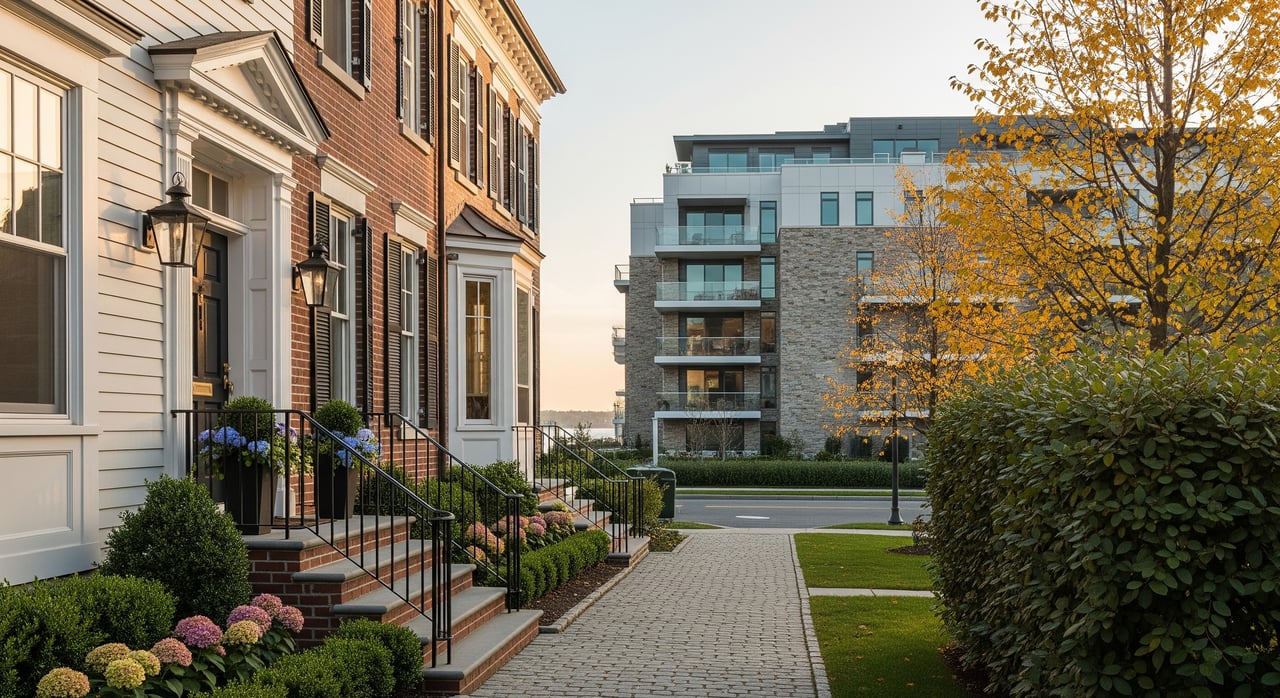
You will see a higher concentration of condominiums in South Norwalk and Downtown Norwalk, including mixed‑use buildings and loft conversions near the South Norwalk train station and along the waterfront. East Norwalk and the harbor corridor also host several waterfront and shoreline condo developments.
Townhouse communities tend to appear in suburban pockets and at the edges of denser centers, including infill sites and newer developments. Areas like Rowayton and neighborhoods farther from downtown may include townhouse complexes with multi‑level layouts and limited exterior maintenance.
If you are moving down from a larger home, note that Silvermine, Cranbury, and parts of north Norwalk feature more single‑family housing, with occasional attached options in select pockets.
How to choose the right fit
- Choose a condo if you prefer low exterior maintenance, enjoy amenities, and value walkability near transit or the waterfront.
- Choose a townhouse if you want a house‑like layout with a private entrance and potentially a small yard, but still want less upkeep than a detached home. Verify whether the townhouse is fee‑simple or condo‑regime.
- Choose a fee‑simple option if you want more control over the exterior and land and are comfortable managing maintenance directly.
Think about your daily life. Do you want elevator access and on‑site amenities, or a private front door and multi‑level living? Are predictable monthly costs more important than hands‑on control? Your answers will point you to the right structure.
Set smart listing alerts
Ask your agent to set MLS alerts tailored to your needs. Include filters for:
- Property type: condominium vs townhouse, and a note to verify legal form in the listing or association docs.
- Price, bedrooms, bathrooms, and square footage.
- Location preferences such as SoNo, East Norwalk, or proximity to Norwalk and Rowayton stations.
- HOA fee range and whether utilities are included.
- Flood zone or waterfront status.
Request that your agent flag listings with early access to association documents and, where available, a resale certificate. Get mortgage preapproval that accounts for HOA dues and any condo project approval requirements.
Buyer checklist before you offer
Gather and review these items as early as possible:
- Declaration of condominium or CC&Rs, bylaws, and rules.
- Current budget, year‑to‑date financials, and reserve study with balances.
- Minutes from the past 12–24 months of association meetings.
- Certificate of insurance and master policy summary, including whether coverage is all‑in, walls‑in, or walls‑out.
- Disclosure of pending litigation and history of special assessments.
- Owner‑occupancy and rental percentages, plus any delinquency reports.
- Dues increase history and planned capital projects.
- Management company details and contract term.
- Parking and storage assignments, pet and rental policies, and house rules.
- Unit survey or plot plan for exclusive‑use areas.
- Seller disclosures and inspection reports. Include radon, pest, and lead if applicable.
- Flood zone data or elevation certificate if near the shoreline or a river.
Questions to ask the HOA or listing agent
- What exactly do the HOA dues include, such as heat, hot water, trash, or snow removal?
- Are there any planned assessments or major projects? When and how much?
- What is the reserve fund balance and the date of the last reserve study?
- Is the project eligible for FHA, VA, or standard conventional financing? Any known lender restrictions?
- What percentage of units are owner‑occupied, and how many owners are delinquent on dues?
- Are there any active or pending lawsuits?
- Where can you review the declaration, bylaws, minutes, and financials?
Red flags to watch
- Low or zero reserve balances and a pattern of special assessments.
- High rental percentages if you plan to use low‑down‑payment financing.
- Pending litigation involving the association or developer.
- Insurance gaps where the master policy excludes items that shift high costs to unit owners.
- Rules that do not match your needs, such as pet limits or rental caps.
Your next step in Norwalk
Buying attached housing is about fit, clarity, and risk control. With the right documents in hand and a clear picture of maintenance, fees, and financing, you can move forward confidently in SoNo, East Norwalk, Rowayton, or beyond. If you are weighing two great options, a side‑by‑side comparison of dues, reserves, and ownership form will usually reveal the better long‑term match.
If you would like tailored listing alerts, document reviews, or a pricing gut‑check on your current home, connect with Thomas Vozzella. With decades of Fairfield County experience and a full‑service approach, you will get practical guidance from search to closing. Prefer to start with numbers? Get an Instant Home Valuation to plan your timing and budget.
FAQs
What is the core difference between a condo and a townhouse in Norwalk?
- A condo is a legal ownership structure with shared common elements, while a townhouse is a building style that can be fee‑simple or part of a condo regime, so you must confirm who maintains exterior and land.
How do HOA fees impact your mortgage approval?
- Lenders count monthly HOA dues in your debt‑to‑income ratio, which can reduce your maximum loan amount, so get preapproved with the dues estimated for your target communities.
Do Norwalk waterfront condos require flood insurance?
- If a lender determines the unit lies in a FEMA special flood hazard area, flood insurance will be required, and even if it is not required, coverage can still be wise for coastal or low‑lying properties.
Can you use FHA or VA financing for a Norwalk condo?
- Yes, if the condominium project meets approval criteria; check current standards and project eligibility through HUD’s condominium resources or ask your lender to verify.
What documents should you review before making an offer?
- Focus on the declaration, bylaws, budget and reserves, meeting minutes, master insurance summary, litigation disclosures, owner‑occupancy rates, and rules covering parking, pets, and rentals.
Where are condos and townhouses most common in Norwalk?
- Condos cluster in SoNo, Downtown, and along the harbor and transit corridors, while townhouse communities are more common in suburban pockets and infill sites closer to the edges of denser centers.